Alternative investment technology is the software investors, fund managers and founders use to record, value and report on assets that do not trade on a public exchange: startup equity, SPVs, private equity and venture funds, private credit, real estate and similar holdings. It exists because these assets arrive as PDFs, capital call notices and cap table exports rather than a brokerage feed, so tracking them by hand breaks down as a portfolio grows. The category splits into a handful of tool types, and most products do one or two of them well.
What alternative investment technology covers
Public-market software can rely on prices, tickers and custodian feeds. Private holdings have none of that by default. A position is defined by a signed document, valued by a mark the GP or company reports, and measured by dated cash flows in and out. Alternative investment technology solutions fill those gaps: they hold the documents, turn them into structured records, keep valuations current and compute returns from the cash flows.
Who uses it falls into three groups:
Investors (angels, LPs, family offices and their advisors) who need one view of what they own across many managers and companies.
Fund managers and syndicate leads who need to form vehicles, call capital, distribute proceeds and report to their LPs.
Founders who need to manage their own cap table, raise money and keep investors updated.
The six main categories
1. Portfolio tracking and aggregation
Tools that pull every holding into one portfolio, usually for the investor. They range from personal net worth apps to platforms built for advisors and family offices. Kubera is a personal balance sheet across bank, brokerage, crypto and real estate. Vyzer combines LP investments, real estate and bank accounts with capital call planning. Addepar and Masttro serve RIAs and family offices with custodian aggregation and entity mapping. Look for coverage of the asset types you actually hold and returns calculated from your own cash flows.
2. Fund administration and investor portals
Software and services the GP or deal lead pays for to run the vehicle: formation, KYC, capital calls, distributions, K-1s and an LP portal. Juniper Square sells investor CRM, portals and fund administration to private markets GPs. AngelList, Sydecar and Allocations administer SPVs and venture funds. As an LP you use whichever portal your manager chose, so a portfolio of ten managers means ten logins.
3. Cap table management
The company’s own ownership record: shares, options, SAFEs, notes and the 409A. Carta, Ledgy, Cake Equity and Eqvista sit here. Investors can usually see what was issued to them on each company’s cap table, but that view is per company, not a portfolio.
4. Data rooms
Secure document sharing for fundraising and due diligence: a founder or GP shares a folder of decks, financials and legal documents and sees who opened what. Some founder platforms bundle one; Visible, for example, includes data rooms alongside investor updates.
5. Document AI extraction
The newest layer. Instead of retyping a capital call notice, capital account statement, K-1 or SAFE, the software reads it and records the amounts, dates and terms. The test is accuracy on your documents and whether you can review and correct what was extracted before it reaches your returns.
6. Analytics and reporting
Performance metrics (MOIC, IRR, TVPI and DPI), exposure by asset class, vintage or entity, and reports for LPs, partners or an accountant. ILPA’s Performance Template is pushing GP reporting toward standard fund-level IRR and TVPI, which makes clean data on the investor side easier to reconcile.
How to choose alternative investment software
Start with the job. Tracking what you own, running a fund, or managing a company’s equity are different products. Buying a fund administrator to track a personal portfolio, or a net worth app to run an SPV, leaves gaps.
Check asset coverage. Direct startup equity, SPVs, fund LP interests, entities, real estate, public equities and crypto are handled very differently across tools.
Ask how data gets in. Manual entry, file import, custodian feeds, document AI or a paid data-entry service. This decides how current the numbers stay.
Ask how returns are calculated. MOIC and IRR should come from dated cash flows you can see, not a single current value field.
Check sharing and security. Roles for a partner, advisor or accountant, MFA, and the vendor’s audit status.
Check the exit. Can you export positions, cash flows and documents if you switch?
Where Raziel fits
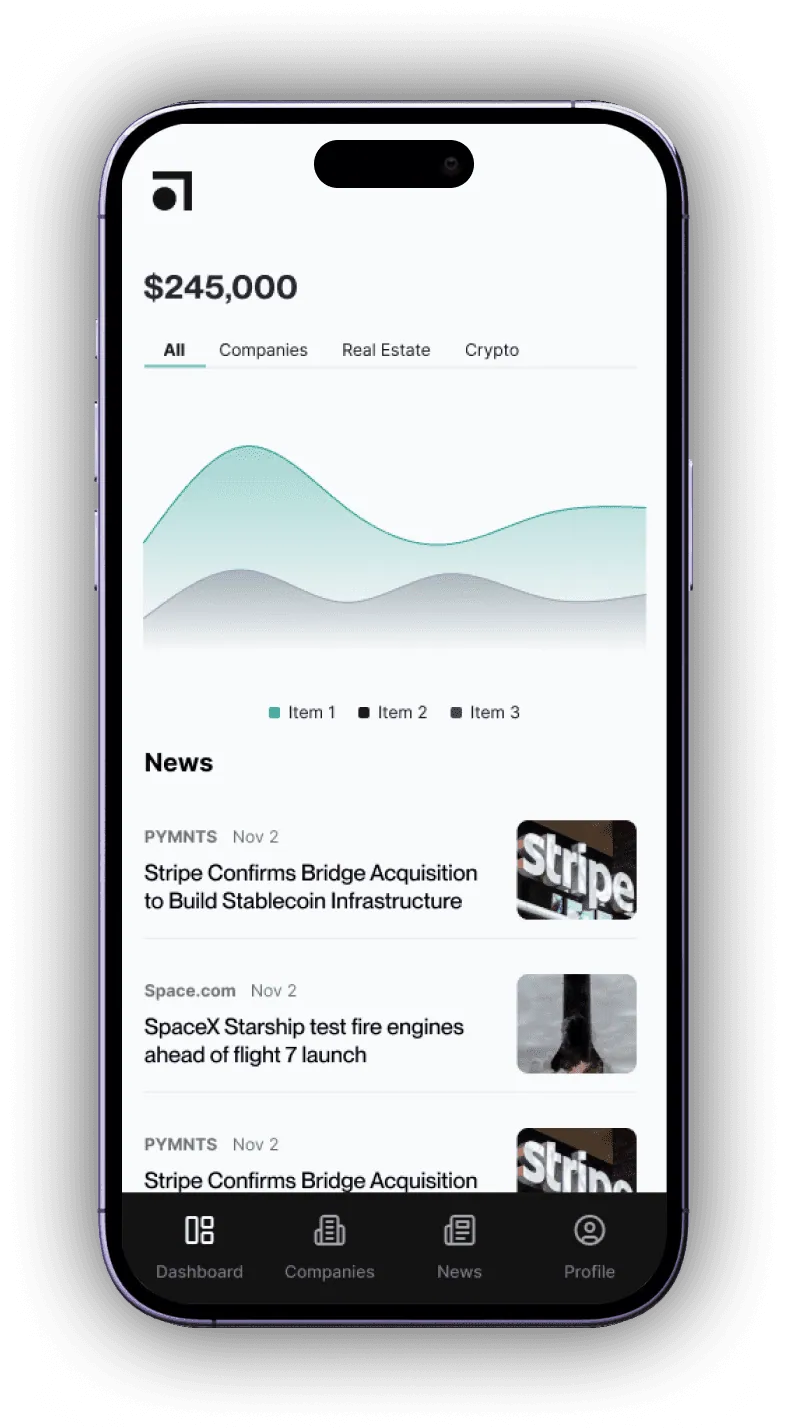
Raziel is a portfolio platform for private investors and founders, in the portfolio tracking category with document AI and analytics built in. On the investor side it tracks startup equity (SAFEs, convertible notes, priced rounds and secondaries), SPVs and fund LP positions, and the LLCs and trusts that hold them, in one portfolio dashboard. MOIC, IRR, TVPI and DPI are calculated from the cash flows you record, and recording a new round re-marks every position in that company (valuations and returns). You can forward statements, capital call notices and SAFEs for AI document import, which is optional. Entities, news on the companies you hold, owner, editor and viewer roles, and native iOS and Android apps are included.
For founders, Raziel adds a fundraising CRM, investor updates with open and click tracking, and a cap table for the company you run. Public equities, real estate and crypto tracking are coming soon.
Raziel does not administer funds or form SPVs. If you are an LP or an angel, it sits on top of the portals your managers chose and gives you one book across all of them. See how it compares with each tool above on the compare page.
Create a free account to start, or see Raziel’s products.