Why Exit Strategies Matter for Startup Investors
When it comes to startup investment, the buzz is often around getting in early, finding the next unicorn, and scaling growth at breakneck speed. But savvy investors know there’s another equally important aspect of the process: getting out. Knowing how and when to exit is a critical determinant of whether an investment yields lucrative returns or fizzles out.
This blog dives deep into why exit strategies are crucial for startup investors, their role in shaping investor success, and how you can craft a plan that works for you.
What Are Exit Strategies and Why Do They Matter?
An exit strategy is a planned approach for investors and entrepreneurs to withdraw from an investment, ideally earning a significant return in the process. More than just a financial maneuver, it’s a roadmap that aligns the goals of all stakeholders and ensures that everyone walks away with mutual wins.
Without an exit strategy, funding rounds, scaling milestones, and even market expansion can feel directionless. Investors, especially those in startups, need a clear exit route from day one, because in the world of high-risk, high-reward ventures, certainty is everything.
Types of Exit Strategies
Here are four common exit strategies and why they might make sense for your investment portfolio:
Initial Public Offering (IPO):
The holy grail of exits, IPOs allow a startup to become publicly listed on a stock exchange. Though prestigious and rewarding, IPOs require robust financial health, consistent growth, and regulatory compliance.
Acquisition:
One of the most common exits, acquisitions occur when a larger company buys a startup outright. Acquisitions are often fast and lucrative, making it a popular choice for investors looking for a stable return.
Strategic Sale:
Similar to acquisitions, but with a twist. The buyer is specifically interested in synergies, such as technology, intellectual property, or access to a new market. Key examples include strategic mergers in tech or healthcare.
Private Equity Buyout:
A private equity buyout involves selling the startup to a private equity firm. This method typically offers solid returns and allows startups to continue growth privately before considering other exits.
By proactively choosing an exit strategy, entrepreneurs maximize value, and investors minimize risks, a true win-win in every sense.
Factors to Consider When Choosing an Exit Strategy
Not all exits are created equal. Here’s what you need to weigh when selecting the best one:
1. Industry and Market Trends
Different sectors require unique considerations. For example, tech startups commonly attract acquisitions for intellectual property, while consumer goods companies are more likely to pursue IPOs.
2. Business Model Hygiene
Is the business model sustainable? Scalable? Profitable? Having clear operational metrics can determine whether private equity funding or a strategic sale is the best move.
3. Funding History
High levels of equity dilution can complicate exits. Knowing who owns what (and how much) will help smooth the process, from negotiations to closing.
4. Market Conditions
Exiting in bullish economic conditions can yield higher valuations, while waiting for tougher markets to recover might be wiser in slow-growth stages. Timing, as always, matters.
How Financial Advisors Add Value to the Exit Process
Financial advisors aren’t just an optional part of the exit strategy equation. They are essential. Here’s why:
Data-Driven Insights
Advisors specialize in analyzing financial health and market trends to project valuations and simulate potential scenarios.
Negotiation Power
With experience in brokering deals, advisors ensure stakeholders receive fair and favorable terms, whether during an acquisition, IPO, or private equity sale.
Legal Guidance
Exit strategies must account for regulatory and tax obligations. A good advisor safeguards both compliance and profitability.
Challenges and Pitfalls in Startup Exits
No process is without its bumps. Here’s what to watch out for:
Overvaluation Risks: Startups that price themselves unrealistically high often fail to secure buyers or IPO interest.
Misaligned Goals: Founders and investors sometimes have divergent priorities (e.g., long-term scaling vs. rapid exits). Clear communication is paramount.
Market Volatility: Sudden dips in the economy can derail well-laid plans. This highlights the importance of maintaining flexibility and contingency planning.
Protecting against these pitfalls requires adaptability and forward-thinking. A successful exit strategy isn’t static. Build one that evolves with your startup’s growth trajectory.
The Future of Exit Strategies
The landscape of startup exits is shifting, driven by technology and globalization. Future trends to look out for include:
AI as a Valuation Partner
Machine-learning algorithms are now assisting in predicting valuations, bringing more accuracy to exit planning.
Cross-Border Exits
International acquisitions and investments are blurring geographic lines. Globalized startups will increasingly seek cross-border deals.
Decentralized Funding Models
Blockchain-based solutions are enabling new exit avenues, from token buyouts to decentralized IPO models.
By staying ahead of these trends, investors can position themselves for higher profitability while minimizing future risks.
What to track when your startup exits
Each exit path leaves different documents and dates. Log them on the lot you already hold, not on a new row, and keep the original SAFE or preferred cost in place.
IPO. Log the lock-up start date (usually pricing day), the stated end date, and whether the restriction is still in force on IPO lockup tracking. Log remaining demands, piggyback rights, and whether a registration was filed on registration rights tracking. After the contract lifts, log holding period, affiliate status, volume caps, and Form 144 needs on Rule 144 tracking.
Acquisition. Copy holdback amount, escrow agent, release dates, claims, and remaining balance from the signed agreements on escrow holdback tracking. Log the metric, measurement period, target, buyer statement, paid amount, and any open dispute on earnout tracking.
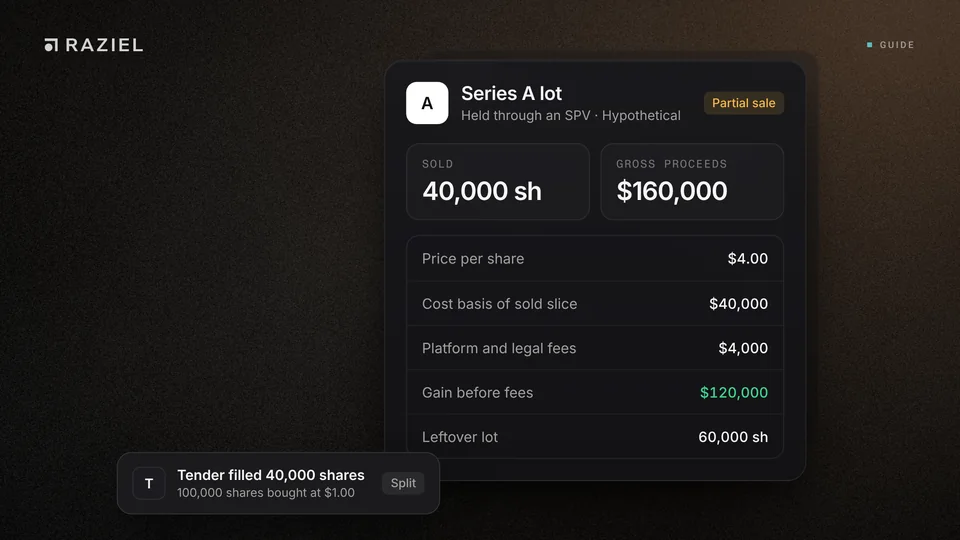
Secondary or tender. A tender is a partial close, not a delete. Split lots sold from lots kept, and log the new cost basis and any leftover lockup on startup secondary sale tracking. Log basis, vehicle, fees, cash in, leftover quantity, and MOIC on secondary stock lot tracking.
Why Every Startup Investor Needs an Exit Strategy
Exit strategies aren’t just a luxury. They’re a necessity in startup investing. They provide clarity, minimize risk, and maximize returns for all stakeholders involved. Whether you’re new to startup investing or an experienced pro, crafting your exit strategy should be as meticulously planned as your initial investment.
Raziel for startup investors follows the money out: acquisitions, secondaries and distributions land against the original investment, so the proceeds and the multiple you actually got are recorded next to what you put in. Create a free account to log your first exit.
This is not legal, tax, or investment advice. Raziel, Inc. does not provide it.