A search for the best angel investment tracker is a category choice, not a trophy. You are comparing a spreadsheet, dedicated angel-ops software, and a multi-asset book. Carta and AngelList are issuer or syndicate portals, not a personal ledger. The sibling best alternative investment apps roundup is the multi-asset class. The angel portfolio tracker page is how to log a book. Neither is this comparison.
Spreadsheet vs dedicated software vs a multi-asset book
A spreadsheet you own. Excel or Google Sheets can hold company, instrument, cash, cap, discount, fully diluted percentage, and a link to the file. The angel portfolio spreadsheet template is that column list. It works while the book is small and every SAFE conversion still fits in your head.
Dedicated angel software. AngelHub, Pinion, Signed, and TheAngel sell SAFE rows, ownership after dilution, update inboxes, and (on some plans) pro rata or tax packs. Sable is on a waitlist. 8FIGURES sells a Carta-connected angel tracker inside a wider net-worth product.
A multi-asset dashboard. Kubera and Sharesight put private holdings next to the rest of a portfolio. Kubera is a net-worth balance sheet that now holds SAFEs. Sharesight is a listed-stock tracker that can record unlisted investments. The head-to-head is on Raziel vs Kubera vs Sharesight. Raziel covers startups, SPVs, funds and the entities that hold them, with public equities, real estate and crypto tracking coming soon. If you write startup checks and nothing else, a dedicated angel tool owns more of the SAFE math. If you also hold funds or listed stocks, a startup-only ledger leaves the rest of the book on another tab.
One shadow ledger vs many founder portals
Carta's cap table is the company's ownership file: shareholders, share counts, equity types, and convertibles (SAFEs or notes), per Carta's explainer (July 29, 2026). Investors request access after they accept securities, the company sets the detail level, and access is per company. Names that never issued on Carta do not appear.
AngelList calls itself the financial system for private markets. For an LP, signed documents live on the investment page, valuations are private by default, and all valuation data is delayed by 90 days (AngelList help). That is a syndicate portal with a confidentiality delay, not a ledger of direct SAFEs you wired off-platform.
The ops failure is reconciling ten founder portals at tax time. One shadow ledger, spreadsheet or software, is the job. The portals are inputs.
What dedicated angel tools actually price
Copied from each vendor's own pages on October 21, 2026. If a number is not on the page, it is omitted.
Angel investment trackers at a glance
| Tool | Free plan | Paid from | Best for |
|---|---|---|---|
| Raziel | 14-day free trial | $49/month, up to 30 companies | SAFEs, SPVs and funds in one book with MOIC, IRR and TVPI, on the web, iOS and Android |
| AngelHub | Up to 5 investments | $29/month (Pro, up to 25) | A small direct-deal book with dilution math |
| Pinion | Unlimited investments, 1 user | $4.95/month or $50/year (Family, 2 users) | Angels and small family offices sharing one book |
| Signed | Up to 5 positions | $29/month or $290/year (Angel) | Update forwarding, the QSBS clock, CPA packets on the Investor plan |
| TheAngel | Up to 10 positions | $29/month or $290/year (Pro) | Mark age and an action queue on every position |
| Kubera | 14-day free trial | $250/year | Whole net worth, with SAFEs and private stock on the balance sheet |
| Sharesight | Up to 10 holdings | $7/month, billed annually | Listed stocks with a few unlisted holdings |
| A spreadsheet | Free | Free | A handful of direct SAFEs you update by hand |
Vendor figures are from each vendor's pricing page on October 21, 2026; Raziel's are from the Raziel pricing page. Check the vendor's page before you buy. The detail for each tool follows.
AngelHub's homepage (angelhub.app) lists SAFE notes, SPAs, cap tables, follow-on tracking, and dilution calculations. Its pricing page: Free: up to 5 investments, basic MOIC, ROI, and IRR. Pro: $29/month, up to 25 investments, deal pipeline, CSV import. Fund: $79/month, unlimited investments, API access. Paid plans print a 7-day money-back guarantee.
Pinion (pinion.vc) is built for angels and small family offices. Direct deals get MOIC, IRR, and a pro rata calculator. Free: $0 forever, 1 user, unlimited investments. Family: $4.95/mo or $50/year, 2 users, AI-powered investor updates, quarterly reports, MCP assistant. Team: $19.95/mo or $200/year, up to 5 users. Enterprise is custom. Pinion's FAQ: it is not a bank or custodian.
Signed (signed.com/pricing) leads with SAFEs, update forwarding, deck triage, and tax-year reporting. Free: $0 forever, up to five positions, with MOIC, IRR, TVPI, DPI, and the QSBS clock. Angel: $29/month or $290/year after a 7-day trial, unlimited positions, a forwarding address, contacts and CRM. Investor: $149/month or $1,490/year, entities kept separate (LLC, trust, fund), a CPA packet per entity, and pro rata tracking. K-1 tracking is marked Soon on the Investor plan.
TheAngel (theangel.app/pricing) is portfolio software for angels. Free: up to 10 positions with no time limit, ownership after dilution, DPI, TVPI, and XIRR, mark age on every position, an action queue, and 3 founder update requests a month. Pro: $29 a month or $290 a year, unlimited positions.
Sable (sable.sequel.co) is a waitlist. It says it syncs AngelList, Carta, and other cap table tools. No price is on the page. 8FIGURES' angel tracker page offers Carta connect for startup equity, SAFEs, and convertible notes. No plan price is on that page.
Kubera's comparison page lists $250 a year with a 14-day free trial, SAFEs and private stock on the balance sheet, and an IRR per position from dated cash flows. Kubera's blog adds a Carta sync (RSUs, RSAs, options, certificates, convertible notes) and market-derived pre-IPO prices from Hiive. Sharesight lists Free (10 holdings), then $7, $18, and $23.25 USD a month billed annually, and every plan can record unlisted investments.
Angel group and syndicate software: what to look for
Searches for angel group management software and angel syndicate platforms usually mix two different jobs. One is running the vehicle: forming the SPV, onboarding and KYC for backers, banking, closing, and K-1s. The other is tracking what members own and reporting to them after the close. Most products do one well. Decide which job you are buying for before you compare prices.
Syndicate and SPV platforms run the vehicle, and the lead pays. Sydecar lists SPVs at 2% of capital raised (minimum $2,500, maximum $12,500) plus a $2,000 regulatory fee, and says it takes no carry (Sydecar pricing). Allocations lists a Standard SPV at $9,950 one time for up to 35 investors (Allocations SPV pricing). AngelList administers SPVs and syndicates, with SPV pricing through sales (AngelList pricing). Backers on all three get a portal for that platform’s deals. Prices as listed on each vendor’s page on October 28, 2026.
Angel group tools track and report for members. Seraf serves individual angels and also sells angel group, fund and family office editions, where members can see their own records; pricing for those editions is not listed (Seraf pricing).
What to check on any angel group or syndicate tool:
Who pays and how. Per-SPV fees, a share of capital raised, an annual fund fee, or a per-seat subscription for members.
What it administers. Formation, KYC and accreditation checks, banking, e-signature, distributions and K-1 delivery, or none of these.
Member reporting. Can each member see their own positions, documents and returns, and can the group send updates from the same place?
Deals done elsewhere. A platform portal shows the vehicles it runs. A member who also writes direct SAFEs or backs other syndicates still needs one book across all of them.
Export. Can you get positions, cash flows and documents out as a file if the group changes platforms?
Raziel does not form or administer SPVs, and it is not angel group deal-flow software. It is the book a member or lead keeps across every platform: SPVs from AngelList, Sydecar, Allocations or any other administrator, direct SAFEs, and fund positions, with returns from the member’s own cash flows. See every head-to-head on the compare page.
When a spreadsheet is enough
Excel works until conversions, follow-ons, and K-1 packets outrun the tab. AngelHub's free cap is 5 investments. Signed's is 5 positions. TheAngel's is 10. Pinion's free plan is unlimited investments for one user. Those are product limits, not a census.
If the book is a handful of direct SAFEs, a dated spreadsheet plus the Carta logins you were granted is enough. If K-1s matter this tax year, note that Signed marks K-1 tracking as Soon.
Where Raziel sits
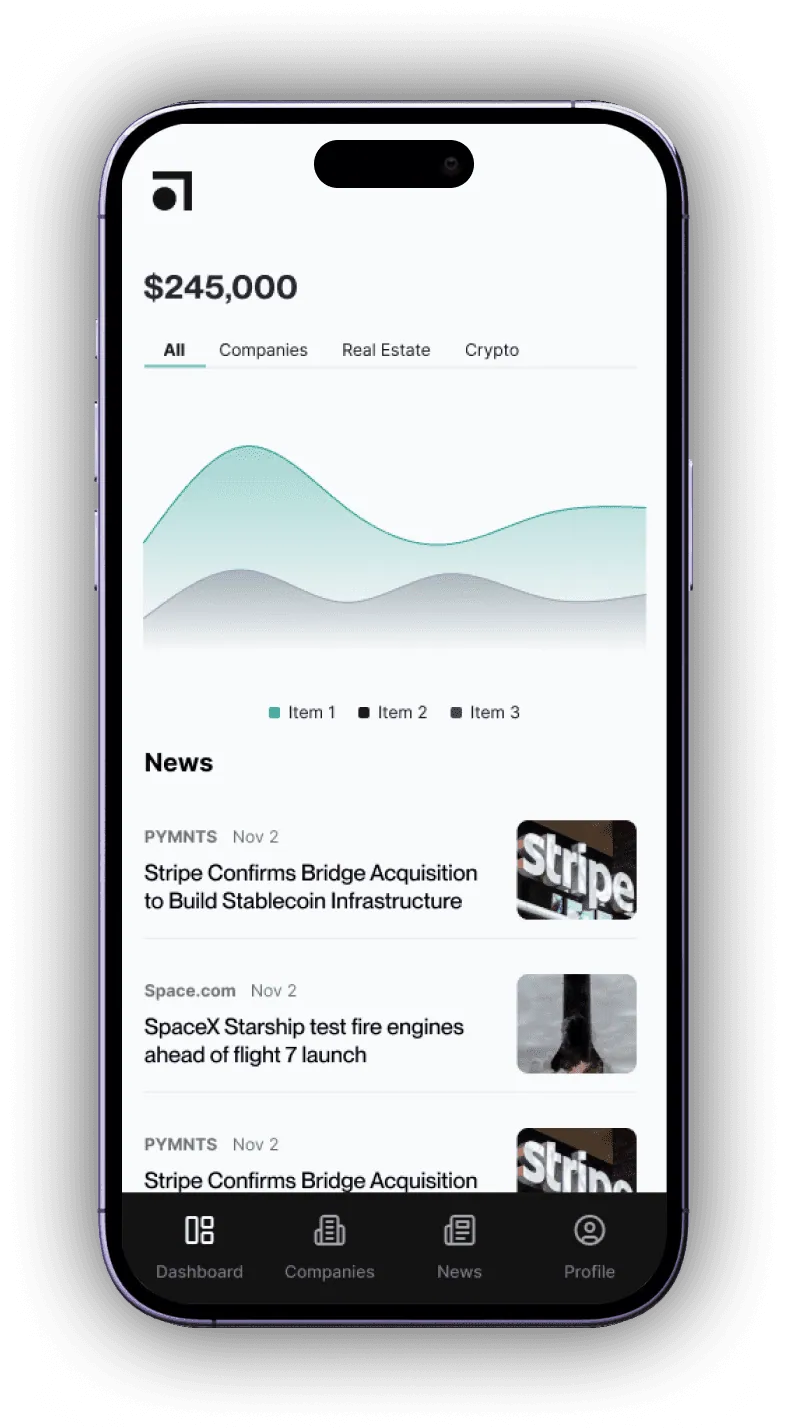
Raziel is one book for direct SAFEs, SPV positions, and secondary lots. The SAFE row carries the cap, discount, and documents through conversion (SAFE note tracking). The SPV row keeps the vehicle, commitment, calls, and K-1 apart from the company it holds (syndicate SPV tracking). A tender opens a new lot instead of overwriting the original (secondary stock lot tracking). IRR, MOIC, TVPI and DPI come from the cash flows on that record, and AI document import can read the SAFE or statement for you.
It will not replace a company Carta login or an AngelList vehicle portal. Use those for issuer data. Keep one book you control. The startup investment dashboard is the money page.
Frequently Asked Questions
What is the best angel investment tracker?
It depends on the book. A handful of direct SAFEs fits in a spreadsheet or a free tier (AngelHub and Signed cap free plans at 5 positions, TheAngel at 10). If you hold SAFEs, SPVs and fund positions together, Raziel keeps them in one book with MOIC, IRR and TVPI from your own cash flows. If you want one net worth view of everything you own, Kubera is built for that.
Can I track angel investments in a spreadsheet?
Yes, while the book is small. Log company, instrument, amount and wire date, cap, discount, fully diluted percentage and a link to the documents. Spreadsheets get harder once SAFEs convert, follow-ons stack up and K-1s arrive. The angel portfolio spreadsheet template lists the columns.
How do I track a SAFE before it converts?
Record the amount, the wire date, the valuation cap, the discount and whether it is pre-money or post-money. Keep that row until the priced round, then convert it to shares at the round price or the cap price, whichever gives you more shares. The SAFE conversion calculator runs the math and SAFE note tracking covers the fields.
Do Carta or AngelList track my angel portfolio for me?
Only part of it. Carta shows a company's cap table when that company grants you access, one company at a time. AngelList shows the vehicles you joined on AngelList, and its valuation data is delayed by 90 days. Neither covers SAFEs you wired directly or SPVs run by other administrators, so most angels keep one book of their own.
How much does angel investment tracking software cost?
Most dedicated angel tools have a free tier for 5 to 10 positions and paid plans around $29 a month. Pinion's paid plan starts at $4.95 a month, Kubera is $250 a year, and Raziel's Investor plan is $49 a month for up to 30 companies after a 14-day free trial.
Create a free account to start, or see Raziel for startup investors.
This is not legal, tax, or investment advice. Raziel, Inc. does not provide it.